

The Four Cities
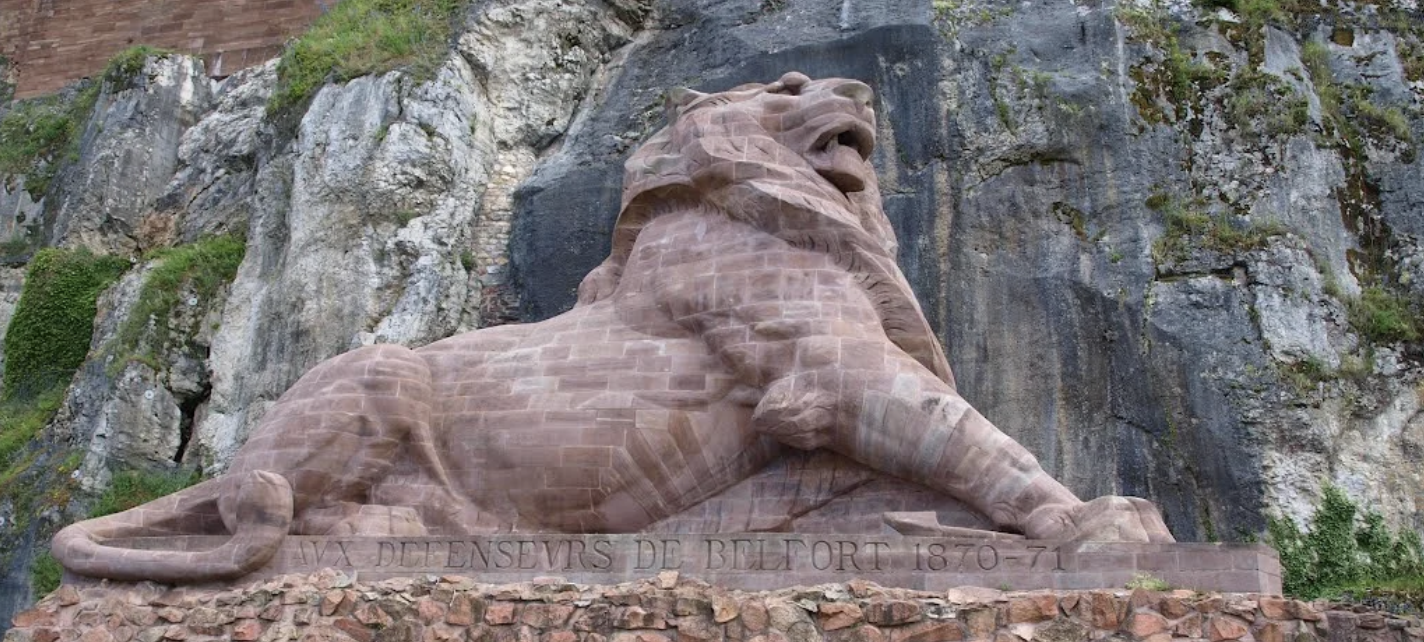
Photo by Guy Crenn
Belfort, France
During the Franco-Prussian War (1870-1871) the people of Belfort, in north-eastern France, defended the city against a much larger force of Prussians. To commemorate the event, the city decided to build a memorial. Frédéric Auguste Bartholdi, a sculptor, who’d been a soldier in the war (better known in America for designing and building the Statue of Liberty) thought something a little more grand was called for. The lion, carved out of limestone, ended up being 72 x 36 feet. Germany protested the original design of the lion facing them to the north and so it was rearranged to face south.
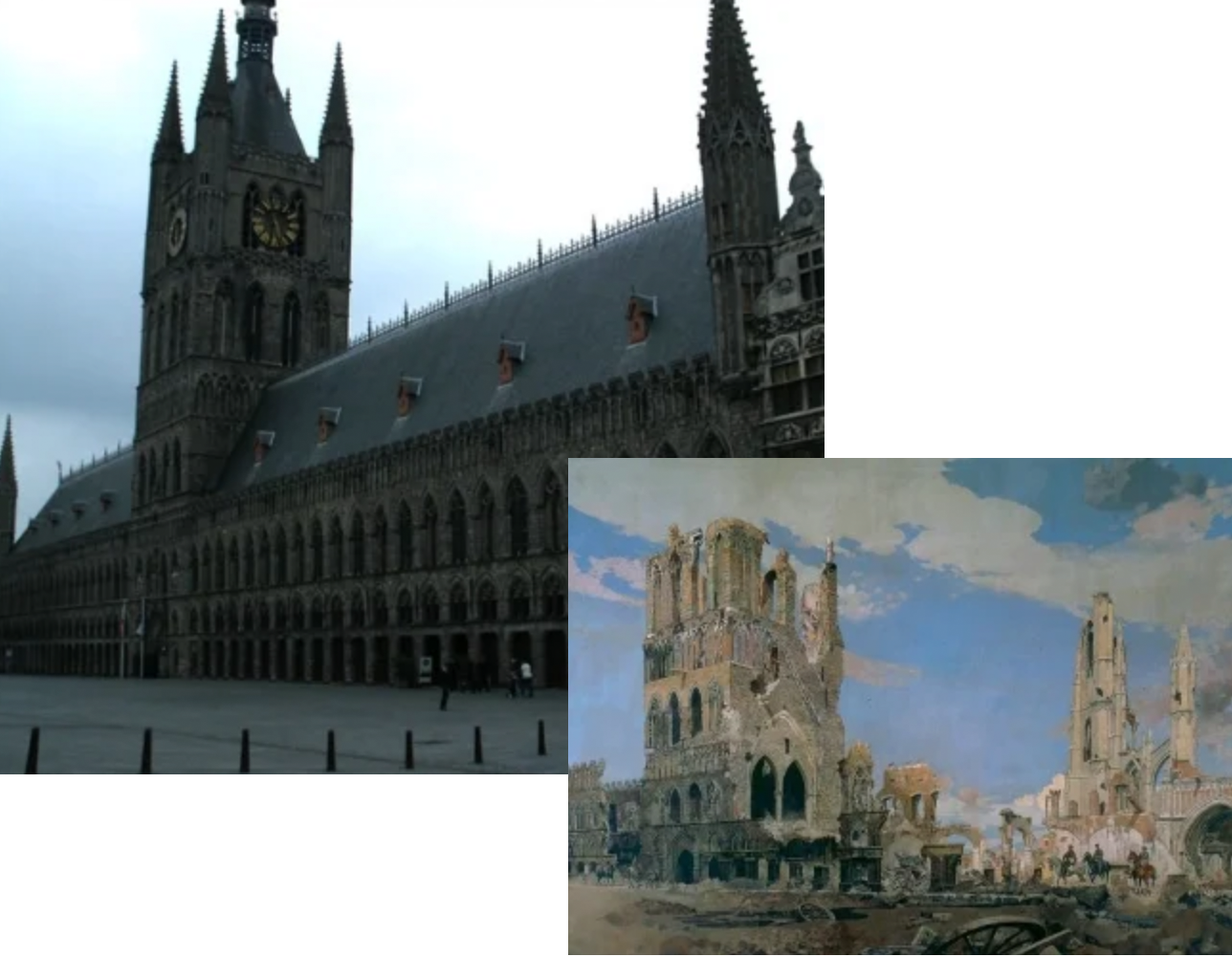
Photo/The Great War Podcast / Painting by James Kerr Lawson (1864-1939)
Ypres, Belgium
This is Cloth Hall, a building in the middle of the city of Ypres, Belgium that has housed the commercial cloth industries warehouses and market since medieval times. Though no one’s exactly sure why, up until the 1800s, people threw cats out of the belfry tower. It was either to cast out devils or witches (which people thought cats had some connection with) or simply because there were too many cats keeping the mice under control in the cloth warehouses.
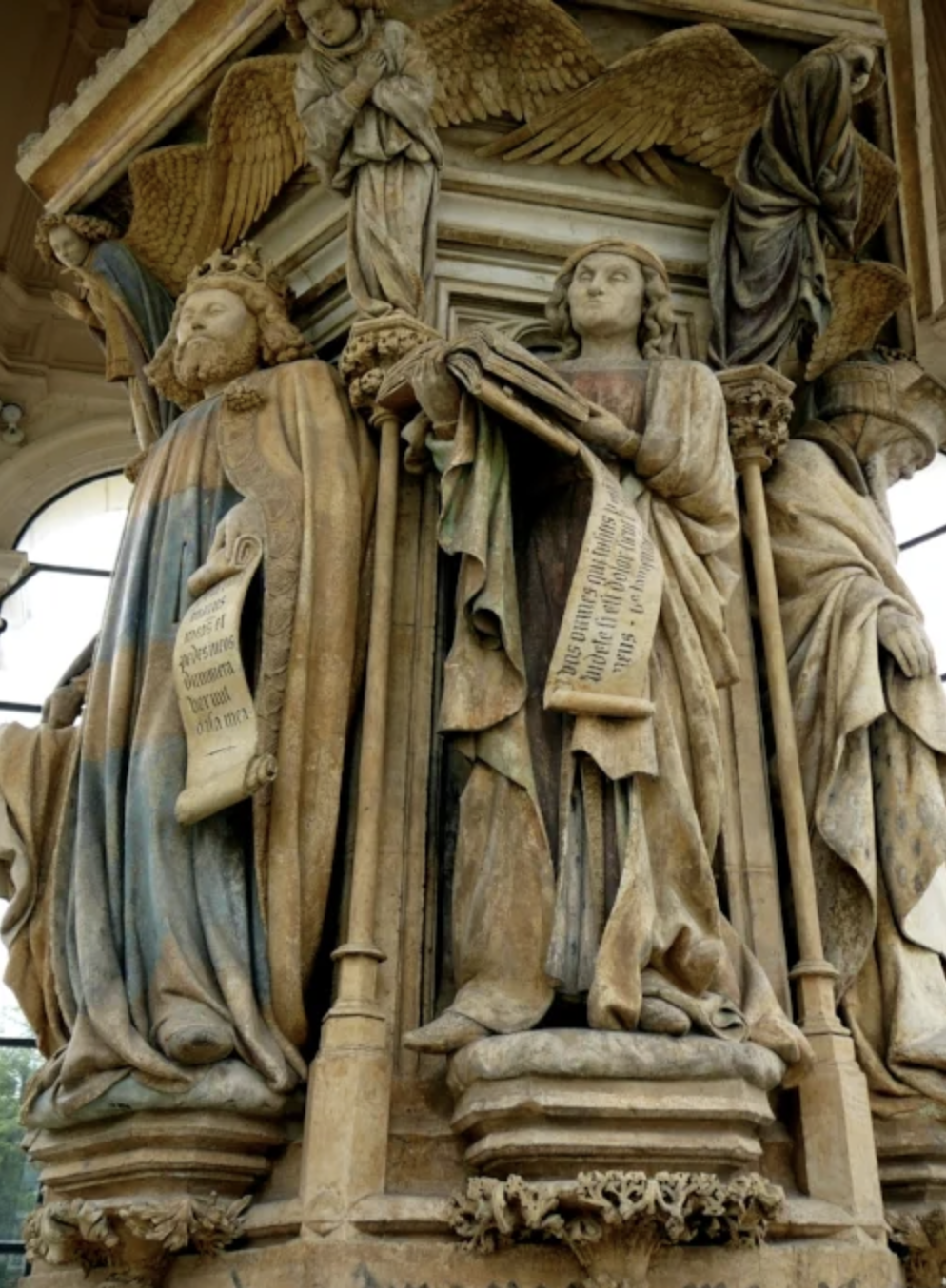
The Well of Souls
Dijon, France
This is a sculpture called “the Well of Moses” by the Dutch artist Claus Sluter (1340-1405/6). It represents the six prophets who were said to have foreseen the death of Christ on the Cross: David, Jeremiah, Zachariah, Daniel, Isaiah and Moses. It was built for Phillip the Duke of Burgundy in the middle of the cloisters in a Carthusian monastery outside of Dijon, France. The duke wanted to be buried in the monastery so he would benefit from the constant prayer. Originally the figures were the base for a tall crucifix, but the thing got banged about during the French Revolution and this is the part still intact.
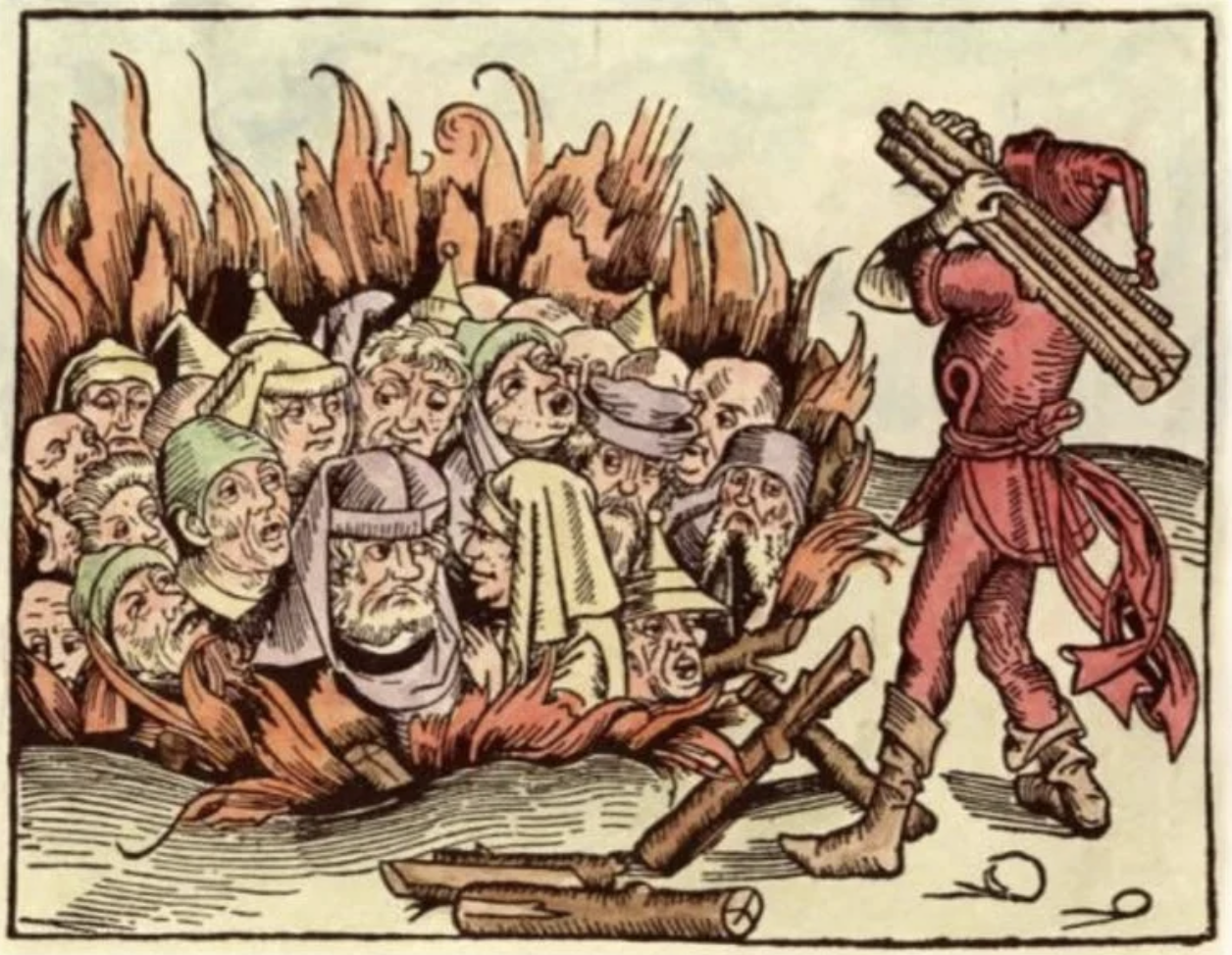
Burning of the Jews" from the Nuremberg Chronicle.